Step into a vast world filled with secrets, exploration, and limitless adventure. Forge your own path, discover hidden stories, and shape your destiny at your own pace. Are you ready to dive into the open world that awaits you?
VeerFx
Play Begins Here
I’m Paramveer Singh, a 3D game designer focused on building immersive, visually rich environments that support both gameplay and narrative. My expertise spans environment modeling, sculpting, texturing, lighting, and level design, supported by tools like Unreal Engine, Unity, Blender, Maya, ZBrush, Substance Painter, and Photoshop.
I’m continually refining my workflow, adopting new techniques, and optimizing assets for real-time engines to ensure every scene I create is polished, efficient, and game-ready.
Hey — You need to know this
01
Gameplay and Fun
A game can have stunning graphics and a compelling story, but if the core mechanics are not fun to play, players will lose interest quickly.
02
Solid Core Vision
Many projects fail because they lack a clear, singular vision of what the game is meant to be. A well-defined concept and understanding of the intended experience.
03
Iterative Process and Playtesting
Game development is an iterative process that involves continuous cycles of prototyping, testing, and refinement.
Game Environments Are More Than Backgrounds They’re The Spaces Where Gameplay, Emotion, And Storytelling Come Together
Create The World Then Bring It To Life.
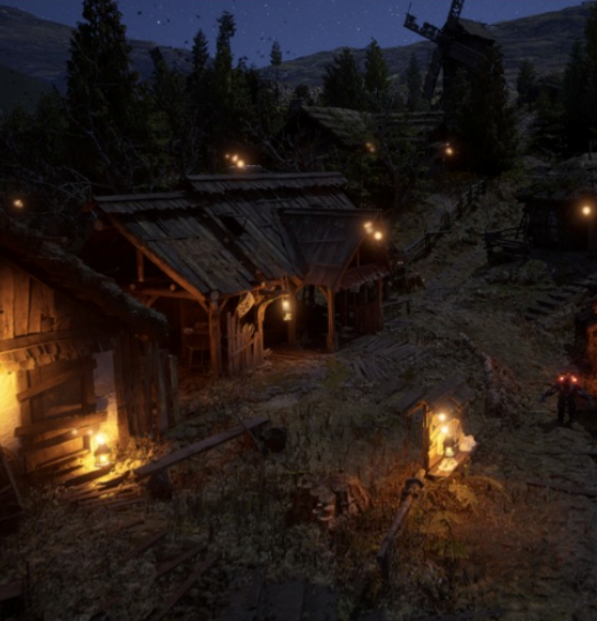
The goal is to design an open-world game that delivers immersive gameplay elements, engaging interactions, and an expansive environment for players to explore.
Platform Fragmentation
Ensuring games work across many different devices (mobile, PC, console) with varying specs.
Performance Optimization
Making games run smoothly without sacrificing visual quality.
Networking Complexity
Building stable, low-latency online multiplayer experiences is difficult.
Blog Over Tips
“Graphics and visual polish are important, but gameplay is king. A visually stunning game with poor mechanics will lose players fast. Start with simple prototypes to test your mechanics and iterate quickly.”
“Even the most beautiful assets can ruin performance if not optimized. Keep an eye on polygon count, texture sizes, and lighting setups, especially for real-time environments. Optimization ensures smooth gameplay and wider accessibility.”
“Game development is rarely linear. Prototype, test, gather feedback, and revise. Iteration helps you identify what works, what doesn’t, and what can be improved. Small, consistent improvements often lead to the best results.”